

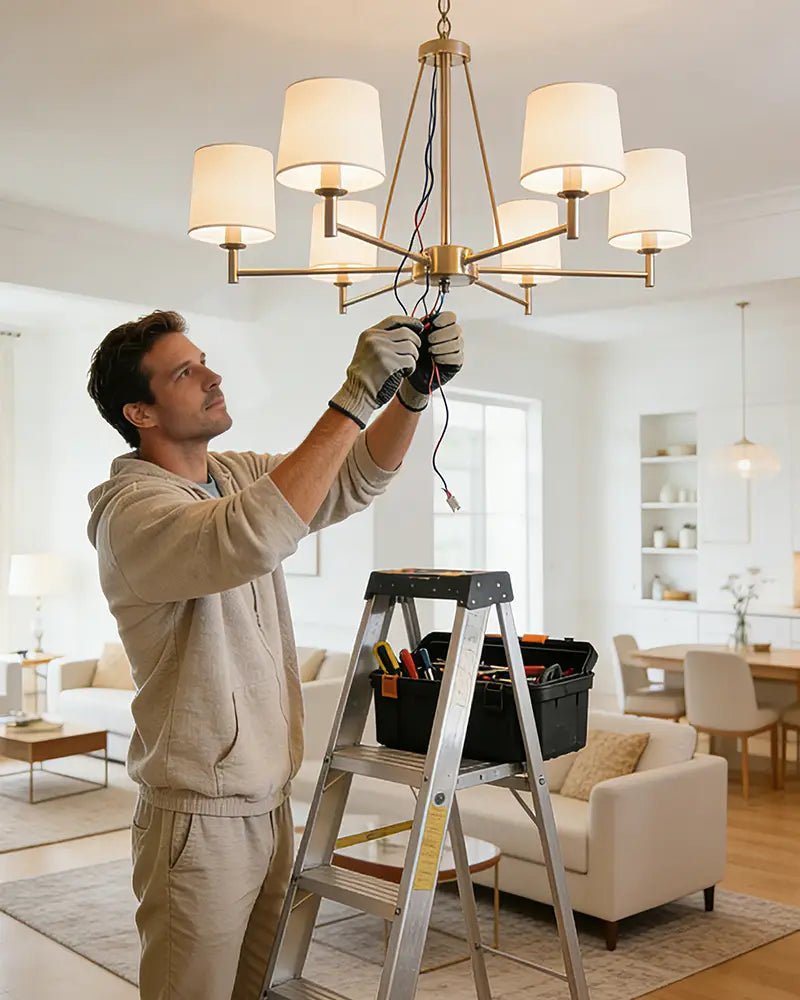
Removing a chandelier may seem intimidating, especially with its weight and the electrical wiring involved. However, with the right tools and proper preparation, this DIY project can be easily managed. Whether you're replacing an old fixture, preparing for ceiling repairs, or simply relocating your cherished chandelier, this guide will take you step by step through the safe removal process.
Preparation: Essential Tools to Remove a Chandelier
Before you start the chandelier removal process, it's important to gather the necessary tools to ensure both safety and efficiency. Using the right equipment will streamline the task and minimize the risk of accidents.
● Non-Contact Voltage Tester: Essential for confirming that no power is running to the chandelier. It detects live wires without any direct contact.
● Screwdrivers (Phillips & flathead): You’ll need both types to remove the screws securing the chandelier to the ceiling.
● Wire Nuts: Used to cap exposed wires after disconnection, preventing accidental contact.
● Stable Ladder: A sturdy ladder is necessary for reaching the chandelier safely.
● Soft Cloth or Drop Cloth: To protect the floor and catch any falling parts, ensuring no damage occurs.
Step-by-Step Guide to Removing a Chandelier

Step 1: Turn Off the Power
The first and most important step is to turn off the power to the chandelier. Never rely solely on the wall switch, as it can malfunction or someone might accidentally turn it back on while you're working. Go to your home's main circuit breaker panel and switch off the breaker that controls the chandelier.
Tip: After turning off the breaker, use your voltage tester to double-check that no power is running before proceeding.
Step 2: Remove the Shades and Bulbs
Before working with the wiring, reduce the weight of the chandelier by removing the bulbs and shades. This makes the fixture lighter and easier to handle. If your chandelier has delicate crystals, carefully store them in a padded box or wrap them in soft cloth to avoid any damage.
Tip: Removing the bulbs and shades also helps protect them from breakage during the removal process.
Step 3: Disconnect the Electrical Wiring

With the chandelier lighter, it's time to disconnect the electrical wiring:
● Loosen the Canopy Screws: Use your screwdriver to remove the screws holding the canopy in place.
● Take Photos for Reference: Before disconnecting the wires, take a photo of the wiring setup. This will be helpful for reinstallation or if you're replacing the chandelier.
● Test for Power Again: Double-check with the voltage tester to ensure the power is completely off.
● Disconnect the Wires: Carefully unscrew the wire nuts and separate the chandelier’s wires from the house wiring. Be gentle to avoid damaging the wires.
Typically, you’ll encounter three wires:
● Black (or Red): The hot wire
● White: The neutral wire
● Green or Bare Copper: The ground wire
Tip: When unscrewing wire nuts, twist them counter-clockwise and gently pull the wires apart. If they're tightly twisted, use pliers, but be careful not to damage the copper.
Step 4: Remove the Mounting Hardware
Once the wiring is safely disconnected, you'll need to remove the mounting hardware that holds the chandelier in place. Some chandeliers are secured with screws, while others hang from hooks. If the chandelier is heavy, make sure to have a helper hold it while you remove the final mounting screws.
Tip:If your chandelier uses a suspension system, ensure you loosen any bolts or screws securing it before removing the fixture completely.
Step 5: Remove the Chandelier
Now that everything is disconnected, carefully lower the chandelier. Be cautious not to damage the walls or furniture with the chain or wires as you bring the fixture down.
Tip: Place the chandelier on a soft cloth or blanket to protect it from scratches or dents during removal. If you're not installing a new fixture immediately, cap the exposed wires to keep them safe.
5 Safety Tips for Chandelier Removal
Safety should always be your top priority when removing a chandelier. Here are some key safety tips to ensure a smooth and safe removal process:
● Wear Protective Gear: Always wear gloves to protect your hands from sharp edges on wires or metal parts.
● Ensure the Power is Off: Never rely solely on the wall switch. Always turn off the circuit breaker and double-check with a voltage tester to make sure no power is flowing.
● Use a Stable Ladder: Ensure your ladder is on level ground and fully opened. Never stand on the top rung, and always work from a comfortable height.
● Get Help for Heavy Chandeliers: If your chandelier weighs more than 15-20 pounds, ask for assistance to avoid strain or accidents.
● Inspect the Ceiling Box: After removing the chandelier, check the ceiling box for any signs of wear or damage. If it’s loose, repair it before installing a new fixture.
Conclusion
Removing a chandelier can be a simple and rewarding task with the right preparation and safety measures. Always prioritize safety, double-check your work, and consult a professional if you're unsure. By following this guide, you’ll safely and efficiently remove your chandelier, making room for a new fixture and transforming your space.
If you're not looking to remove your chandelier but simply want to clean it, we've got you covered too! Check out our article on How to Clean a Crystal Chandelier Without Taking It Down for helpful tips on keeping your chandelier sparkling without the hassle of taking it down.
FAQ About Removing a Chandelier
Do I Need an Electrician to Remove a Chandelier?
For most standard chandeliers, you can remove it yourself if you're comfortable with basic tools and following safety precautions. However, if your chandelier is particularly heavy or installed in a hard-to-reach area, it’s safer to hire a professional.
What If the Chandelier Won’t Loosen?
If screws are stuck, apply a penetrating oil like WD-40 and let it sit for 10-15 minutes. Then, use a properly fitting screwdriver to loosen the screws. If the canopy is painted onto the ceiling, use a utility knife along the edges to break the seal before attempting to remove it.
How Should I Handle the Electrical Wiring?
If you’re not replacing the chandelier immediately, cap any exposed wires with wire nuts and secure them with electrical tape. For a cleaner finish, place a blank cover plate over the junction box until you're ready to install a new fixture.
Is It Safe to Remove a Chandelier Myself?
Yes, as long as you take necessary safety precautions, such as turning off the power at the breaker, using a voltage tester, and getting help with heavier fixtures. If you're unsure about any step, don't hesitate to consult a professional.
What Should I Do With the Chandelier After Removal If I Plan to Store It?
Gently clean the chandelier, then carefully wrap delicate parts (like crystals or glass shades) in soft cloth or bubble wrap. Coil the chain and secure it with zip ties or tape to prevent tangling. Store everything in a sturdy box in a dry location, and label the box clearly for future reference.


